
The Infrastructure Dividend: Why Dubai’s 2026 Budget Is a Game Changer for Real Estate
As we enter January 2026, discerning investors are shifting their focus from chasing the latest developments to capitalizing on opportunities created by the “infrastructure dividend.” The key driver behind this shift is Dubai’s record-breaking AED 99.5 billion budget for 2026, representing a 15 percent increase over 2024 spending levels, as confirmed by the Dubai Department of Finance.
The 48 Percent Signal
The most important aspect of this budget is not the headline figure itself, but how the funds are allocated. Nearly 48 percent of the total budget—approximately AED 47.8 billion—has been dedicated specifically to infrastructure and construction projects.
At a time when many global cities are tightening expenditure, Dubai is doubling down on physical development. For property investors, this allocation is a strong signal of long-term stability and confidence in the market.
This funding is supporting the AED 128 billion expansion of Al Maktoum International Airport, which is set to become the world’s largest aviation hub, as well as the AED 18 billion Dubai Metro Blue Line. According to the Roads and Transport Authority, the Blue Line is expected to reach 30 percent completion by the end of 2026—a milestone that is likely to directly impact residential land values in surrounding areas.
The “Shoreditch” of Dubai: Jumeirah Garden City
One area drawing increasing attention is Jumeirah Garden City, formerly known as Satwa and often compared to London’s Shoreditch.
This district represents a clear case of urban regeneration and highlights a notable “value gap.” While branded residences in nearby DIFC are launching at prices exceeding AED 4,000 per square foot, recent market data shows Jumeirah Garden City trading between approximately AED 1,848 and AED 2,050 per square foot.
As a result, investors are increasingly targeting G+8 boutique developments. These projects offer a higher-quality, lower-density living option that appeals strongly to professionals working in and around the financial district.
The “Southern Heartbeat”: Dubai South and Expo City
If Jumeirah Garden City reflects urban regeneration, Dubai South represents the city’s future growth corridor. What was once primarily a logistics zone has evolved into a major investment destination.
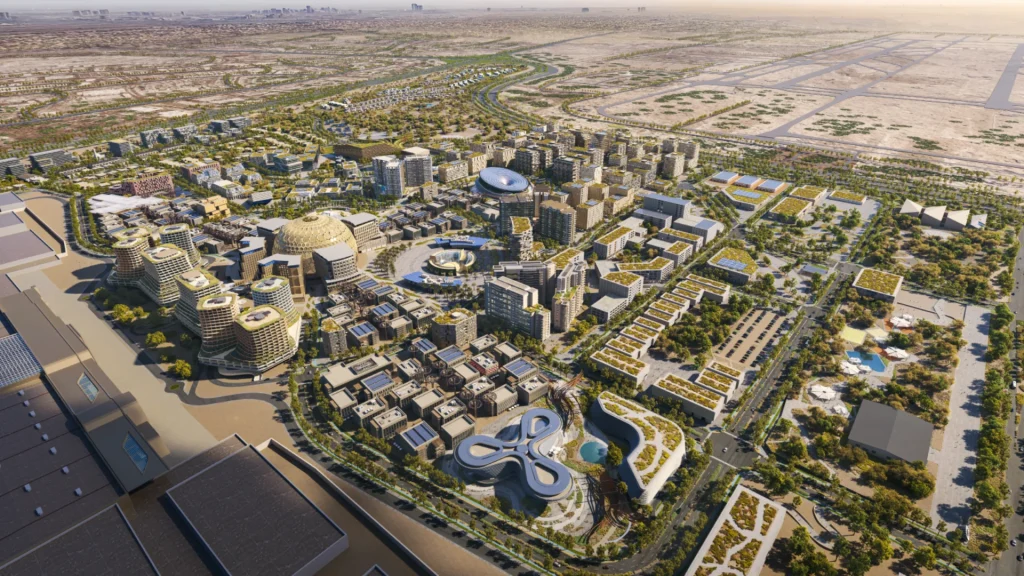
Dubai South currently delivers some of the highest gross rental yields in the city, typically ranging between 7 percent and 10 percent. This performance is largely driven by the growing population of aviation, logistics, and support-sector professionals.
During the announcement of the airport master plan, Sheikh Mohammed bin Rashid emphasized that an entire city is being developed around Al Maktoum International Airport, designed to accommodate more than one million residents once completed.
2026 Verdict: Quality Over Quantity
As Dubai moves deeper into an infrastructure-led growth phase, investors should closely track government spending priorities.
The 2026 budget reinforces the city’s vision of a “20-minute city,” where work, lifestyle, and essential services are seamlessly connected. With the International Monetary Fund projecting approximately 5 percent GDP growth for the UAE in 2026, the economic fundamentals remain strong.
Whether through the boutique redevelopment of Jumeirah Garden City or the airport-driven expansion of Dubai South, the message is consistent: invest in locations where the city is actively building its future.
What’s Next?
Dubai’s 2026 budget clearly demonstrates a long-term commitment to infrastructure development and urban regeneration. As the city continues to evolve, investors who align their strategies with these priorities will be best positioned to benefit.
The Dubai property market narrative has shifted. After years dominated by off-plan speculation, the market is maturing. By focusing on growth corridors such as Jumeirah Garden City and Dubai South, investors can take advantage of opportunities created by this transformation.
With a strong economic outlook and proactive government planning, Dubai is firmly positioning itself as one of the world’s most compelling real estate investment destinations in the years ahead.