
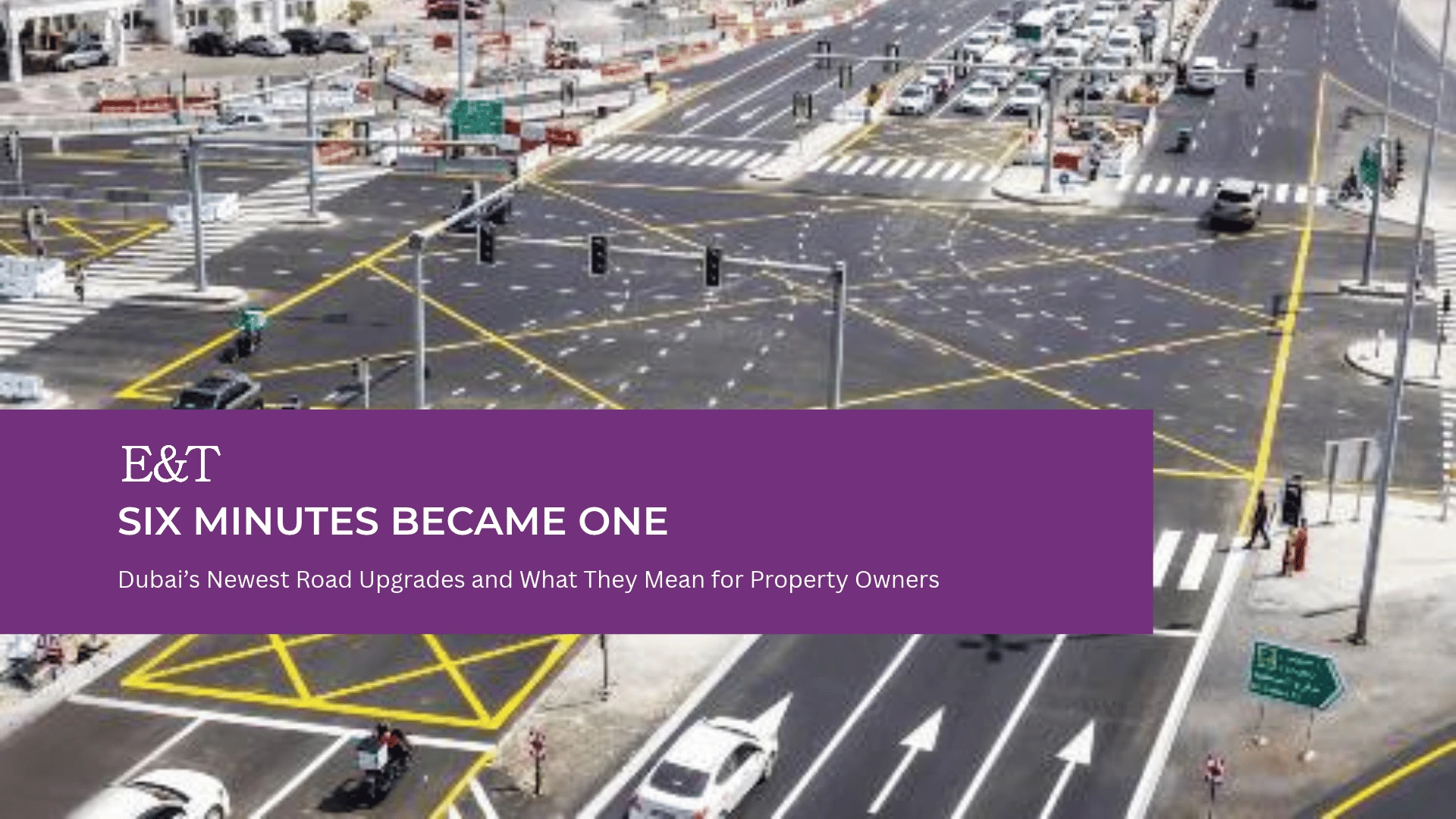

Six Minutes Became One: Dubai’s Newest Road Upgrades and What They Mean for Property Owners
A journey through one of Dubai’s busiest junctions used to take six minutes. The final bridge at the World Trade Centre, scheduled to open on October 30, is meant to cut it to one. Two days later, Dubai Municipality loosened the planning rules in neighbouring Al Satwa. The two announcements are separate, but they point the same way. Dubai is rebuilding how people reach its neighbourhoods, and the rules for what can be built there are starting to follow. Here is what has opened, what is coming, and how to read it as a property owner.
What Has Just Opened
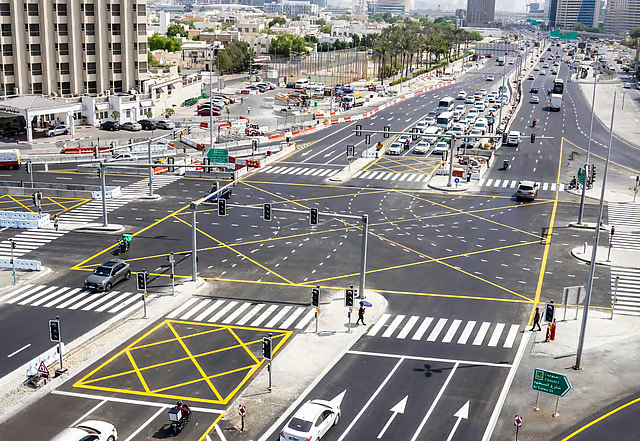
The final bridge in the AED 696 million World Trade Centre Roundabout project is a 1,000 metre structure connecting Al Majlis Street to 2nd December Street. The project is expected to benefit more than 500,000 people. The junction links Sheikh Zayed Road with the Trade Centre, DIFC, Al Satwa, Al Karama, Al Jafiliya and Al Mankhool. RTA’s stated target for the finished junction is to cut delays from 12 minutes to 90 seconds.
In Al Satwa, the roundabout is now a signalised intersection. Peak hour waiting times and queues have fallen by up to 60 percent. The junction serves Al Satwa, Trade Centre, Al Bada’a, Al Jafiliya, Al Hudaiba and Jumeirah, and eases access to Sheikh Zayed Road.
On Al Qudra Road, a new four lane bridge opened in August at the junction with Sheikh Zayed bin Hamdan Al Nahyan Street, towards Al Qudra City. Once the full junction upgrade is complete, waiting is set to fall from seven minutes to one, a reduction of 85 percent.
The Bigger Corridors Behind Them
RTA says it is advancing 164 strategic projects worth AED 35.3 billion. These four have the widest reach for property owners.
| Project | What it connects | Stated impact | Timing |
| Fourth Corridor, Phase 1 | Al Shanouf Road in Sharjah to Dubai Al Ain Road, about 30km, AED 3.5bn | Journey cut from 35 to 14 minutes, about 600,000 people served | Approved September 16, completion date not announced |
| Fourth Corridor, Phase 2 | Dubai Al Ain Road to Al Faya Road in Abu Dhabi, 50km | Journey cut from 50 to 24 minutes, about 3.1 million people served | Completion date not announced |
| Latifa bint Hamdan Corridor | Sheikh Zayed Road, Al Khail Road, Sheikh Mohammed bin Zayed Road and Emirates Road, 12km, AED 2bn | Umm Al Sheif Street to Emirates Road cut from 33 to 15 minutes | End of 2028 |
| Hessa Street, Phase 2 | Al Khail Road to Sheikh Mohammed bin Zayed Road, 3km | Journey cut from 24 to 5 minutes, about 650,000 residents across 10 communities including JVC and Al Barsha South | Under construction |
Source: RTA and Dubai Executive Council announcements, September to November 2026. Journey times and capacities are stated project targets, not measured results. Verify before publication.
The Fourth Corridor is the headline. It will be the fourth strategic road axis between the emirates, alongside Sheikh Zayed Road, Sheikh Mohammed bin Zayed Road and Emirates Road. It runs 80km with 12 lanes, capacity for up to 24,000 vehicles an hour, 72 bridges and 17 tunnels. It also connects with Al Maktoum International Airport and Etihad Rail. RTA says it is designed to pull through traffic, particularly trucks, away from urban areas.
Planning Follows Access: Al Satwa
On November 1, Dubai Municipality updated the planning regulations for Al Satwa. Plots along internal roads can now hold a ground floor and two floors of residential apartments, replacing a framework that mainly allowed attached villas. A wider range of residential and commercial uses is permitted, with additional incentives for plots of 1,000 square metres or more.
Nothing in the announcement links the rule change to the junction works, so the two should not be read as cause and effect. But owners in a district that has just gained a faster junction have also gained more options for their land.
What It Means If You Own
Journey time is what tenants and buyers actually search for. A project that shortens the trip between a community and the workplaces, schools and airports people need widens the pool of people who will consider living there. That tends to show first in enquiries and days on market, and later in price. There is no 2026 data yet that measures this for these projects, so treat it as direction rather than forecast.
If you let a property, update the listing the day a relevant project opens. Journey times to DIFC, Downtown or the airport are a selling point, and a faster junction costs nothing to advertise. If you plan to sell, check where your property sits against the project dates. Gains arrive at completion, not announcement, and several projects run to 2028. Until then, diversions, noise and hoardings can weigh on listings nearby.
If you are buying, look for communities where road upgrades and public transport arrive together. The Fourth Corridor links to Etihad Rail and the airport, and the Urban Centres Development Plan approved last week aims to lift the share of residents living near metro stations from 52 to 74 percent. Roads and rail pointing at the same communities is a stronger case than either alone.
Whether you want to know how a specific project affects your property, your search or your portfolio, our team is available for a private consultation or complimentary valuation.
Contact us at info@edwardsandtowers.com or visit edwardsandtowers.com.

